


Breast Implant Types
- Saline vs Silicone Gel Filled Implants
- History of Silicone Implants
- Advantages of the Form Stable Cohesive Implant
- The Safety of Silicone Gel Breast Implants
- Candidates for Silicone Breast Implants
- Implants: Textured vs. Smooth Surfaces
- High Profile vs. Round vs. Anatomical Shaped Breast Implants
Saline vs Silicone Gel Filled Implants
Breast implants are implantable medical devices used to cosmetically enhance the size and shape of the breast. Breast implants are also used for breast cancer reconstruction to restore volume after mastectomy. Breast implants have an outer silicone shell filled with a material consisting of either saline solution or silicone gel. Saline solution (salt water solution) is found throughout the body and is completely harmless when absorbed. The newer generation silicone implant are filled with a cohesive gel, which is “thicker” than the older generation implants. Dr. Neil J. Zemmel believes both implants are safe for cosmetic and reconstructive purposes.
There are advantages to each type of implant. Saline implants are implanted during surgery and then filled. The fill volume can be finely tuned to achieve better symmetry and shape. Silicone implants are prefilled and once implanted cannot be adjusted. Furthermore, the FDA has mandated a slightly longer incision for silicone implant placement. For this reason silicone implants cannot be placed endoscopically through a navel incision and an axillary incision.
Dr. Zemmel believes both types of implants give excellent results in properly selected patients. Silicone implants are reported to have an improved texture when compared to saline implants. The viscosity (thickness) of the cohesive gel implants mimics the feel of natural breast tissue better than saline filled implants. This effect is increased in thinner patients with less breast tissue and muscle covering the implant. Your surgeon will discuss the differences between the implants in great detail during your consultation.
History of Silicone Implants
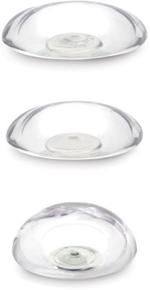 Breast implants have been popular since their introduction in the 1960s, but a large amount of attention was focused on silicone implants the late 1980s and early 1990s. During this period many woman claim to have developed illnesses related to silicone implants including autoimmune diseases such as arthritis, lupus, scleroderma, connective tissue diseases and even cancer. Large class action suits were filed. Thousands of women claimed that their symptoms of chronic fatigue, breast cancer, hair loss, were caused by leaking silicone implants. As a result of the lawsuits, without any supportive medical research, the FDA imposed a ban on the sale of silicone gel breast implants in 1992. At that point silicone could no longer be offered to the general public for cosmetic uses. Several implants manufacturers paid billions of dollars in claims and were forced into bankruptcy.
However, the FDA allowed silicone gel implants to remain in use after 1992, but only if a patient met certain criteria and participated in clinical trials. In November of 2006, the FDA approved Allergan’s silicone gel-filled implants if the company met certain conditions. Seven years later, Allergan’s silicone implants with a more cohesive gel were approved by the FDA.
Thomas Cronin and Frank Gerow, plastic surgeons from Houston, Texas developed the first implantable breast prosthesis in conjunction with Dow Corning Corporation in 1961. The first procedure was performed in 1962. The development of silicone implants can be categorized into 5 generations denoted by the separate production methods.
First Generation Silicone Implants
The original Cronin-Gerow implants were made of an anatomic tear drop shaped silicone shell filled with a thicker silicone gel. The implant was coated with Dacron patch to reduce subluxation of the implant.
Second Generation Silicone Implants
Plastic surgeons then requested modification to the implants in order to produce a more natural shape and feel. These implants were redesigned in the 1970s using a thinner outer shell and less viscous gel. These new implants had higher rupture rates and diffusion of the gel filler “gel bleed” through the intact implant shell was common. This resulted in a high rate of capsular contracture, which is scarring around the implant. These were the implants primarily involved into the lawsuits of the early 1990s.
Another second-generation modification was the use of polyurethane foam coating on the implant shell. This coating was effective in lowering the rate of capsular contracture by causing reduced formation of scar tissue around the implant. These implants were later removed from the market due to concern of potential adverse health effects from the breakdown products from the polyurethane. The FDA performed a large study assessing the risk of cancer in these patients and found that cumulative risk of cancer was so insignificant as not to justify removal of the devices from patients. Polyurethane implants are still used in Europe and South America.
Double lumen shell designs were also introduced during second-generation implant design. These implants were a silicone breast implant inside a saline breast implant. The double lumen design was an attempt to provide the cosmetic benefits of gel in the inner compartment, while the outside compartment contained saline. Implant volume could be adjusted after surgical placement. The current versions of these devices, the Becker Breast Implants, are used primarily for breast reconstruction.
Third & Fourth Generation Silicone Implants
The 1980s saw the development of third and fourth generation breast implants. This was a series of advances in manufacturing with polymer coated shells to decrease gel diffusion across the implant shell wall. The gel filler was also redesigned to be more cohesive. The increased cohesion of the gel reduced potential leakage after shell rupture when compared to earlier devices. The shell was also redesigned with an increased durability when compared to the earlier second generation implants. A variety of both round and anatomic shapes (tear drop shaped) were available during this period. Anatomic implants are textured to increase tissue adherence, reducing rotation and to reduce the rate of capsular contracture. Round implants are available in both smooth and textured surfaces.
Fifth Generation (“Highly Cohesive Gel” and “Gummy Bear” Silicone Gel Breast Implants)
Form stable (highly cohesive) implants are made of silicone polymer shells filled with a more cross-linked form of silicone. These newer implants are designed to retain their shape during a rupture and decrease gel leakage and movement. Studies of these devices have shown significant improvements in safety and efficacy over prior implants with decreased rates of rupture and capsular contracture. Allergan’s Natrelle® 401 Style breast implants, also called gummy bear implants, have shown to produce overall enhanced patient outcomes due to their teardrop shape and firmer structure.
Advantages of the Form Stable Cohesive Implant
Shape: Cohesive breast implants may retain their shape better than other previous breast implant designs. Fourth generation silicone or standard saline breast implants are subject to gravity and the normal motion of the breast and body. These implants may experience distortion over time. Form stable cohesive gel implants have a distinct shape that is imparted to the overlying breast.
Capsular Contracture: The European experience has been that high grade capsular contracture seems to occur less frequently with cohesive implants. It is not clear if this is a short or long term effect. Some researchers speculate that it is related to less diffusion of silicone than with non-cohesive fillers, while others believe it is due to the increased firmness of the implant, which prevents the tissue from contracting around it.
Rupture and Gel Leakage: All breast implant shells are subject to rupture like any other surgical device. All breast implants have a lifetime. Folding and rippling of the breast implant shell is thought to contribute to the rate of shell rupture. With a thicker shell and more cohesive gel, fatigue fractures may occur at a low rate thereby reducing breast implant rupture. The highly cohesive gel will likely have a low rate of migration.
Implant Rippling: Since the filler material does not shift from one pole of the implant to another, upper pole breast implant collapse seems less likely.
The Safety of Silicone Gel Breast Implants
Several large retrospective studies have been conducted to examine the claims relating systemic symptoms of connective tissue disease, fibromyalgia, and neurological issues to silicone implants. These studies have found localized risks associated with all breast implants (i.e. risk of infection, capsular contracture and gel leakage) but no conclusive evidence to support the claims of systemic illness. Many studies conducted by the Institute of Medicine and other experts have found no connection between silicone breast implants and these diseases.
Candidates for Silicone Breast Implants
Prior to the FDA approval in November 2006, silicone gel breast implants were not available for general use and women could only obtain silicone breast implants as part of an FDA-sanctioned adjunct study. Patients who may qualify must meet the following criteria:
- Cosmetic breast augmentation patients must be at least 22 years of age. Cosmetic breast augmentation includes primary augmentation to increase the size of the breast, and secondary surgical revision to correct or improve the result of a primary breast augmentation surgery.
- Breast reconstruction includes primary reconstruction to recreate breast tissue that has been excised due to trauma or cancer or that has failed to develop properly. Breast reconstruction also includes secondary revisional surgery to improve the result of a primary breast reconstruction surgery.
Implants: Textured vs. Smooth Surfaces
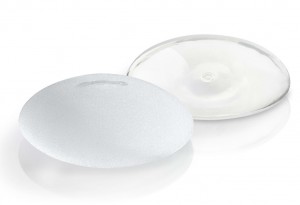 Breast implants may have a rough, textured surface or may have a smooth surface. The textured implants were designed to increase tissue adherence. The textured surface acts “like Velcro” to the tissue interface. The goals of textured surfaces are to decrease potential rotation of the implant and to decrease the rate of capsular contracture. This effect appears only when the implant is placed above the pectoralis major muscle of the chest wall. Textured implants have not been shown to provide any reduction in complications versus smooth implants when placed in the submuscular space.
Textured implants also have disadvantages. Textured implants are produced by making the surface of a smooth implant textured on its outer surface. This process produces a shell thicker and harder. This can potentially make the implant more visible under the skin. The implant may also be felt more easily. Textured implants also tend to have a higher rate of traction rippling and rupture.
Because of these potential complications, Dr. Zemmel often uses smooth-surfaced implants or textured gummy bear implants, since they do not have the same risks as traditional textured implants. Dr. Zemmel places all breast implants in the submuscular position. Utilizing smooth-surfaced or textured gummy bear implants, as well as placing them using a submuscular approach can provide a much more natural look and normal feel when compared to other implant types.
High Profile vs. Round vs. Anatomical Shaped Breast Implants
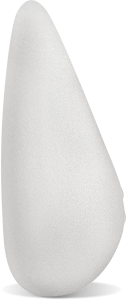 Dr. Zemmel offers smooth round implants as well as anatomic textured implants. Round breast implants provide excellent shape, contour and volume restoration. Implants that are teardrop shaped are known as anatomic implants. These implants are designed to better mimic the shape of the breast and to provide greater upper pole fullness.
Dr. Zemmel also gives his patients the option of a moderate or high profile implant. High profile implants are narrower and project farther than moderate profile implants for any given volume. This allows Dr. Zemmel to give a higher volume implant without a large increase in implant diameter. He believes this gives patients a thinner, more contoured look without achieve a “shelf-like” appearance of the chest. Women with more petite frames can therefore undergo the same increase in volume without a large diameter implant. Some women who could benefit from a concurrent breast lift may avoid this extra procedure by opting for a high profile implant placed via a dual plane technique.

